
A sump pump quietly protects your home from flooding, working behind the scenes to keep your basement dry and your foundation safe. But when your sump pump is failing, you might not realize it until water starts seeping in—and by then, the damage can be extensive.
Whether you live in an area with frequent storms or have a home prone to dampness, recognizing early warning signs can save you from costly repairs and stress.
Understanding how to tell when your sump pump is failing helps you take timely action to prevent flooding, mold, and structural damage.
Before disaster strikes, let’s explore the most common indicators that your sump pump may be in trouble and what you can do to protect your home.
Table of Contents
Are Unusual Noises an Indicator That Your Sump Pump is Failing?
Usually true, but not always. The sump pump might move inside of the sump basin, which can make the discharge pipe rattle or vibrate against floor joists.
Reposition the sump pump inside of the sump basin. Then use a rock, a brick, or something else to wedge between the sump pump body and the sump basin to keep it in place.

A properly functioning sump pump should operate quietly, producing only a gentle hum or soft whir. When you start hearing grinding, rattling, or gurgling sounds, it’s a clear sign that something is wrong.
These noises often point to worn-out or damaged parts inside the motor or impeller.
Over time, sediment buildup can also cause these components to misalign, resulting in friction that wears down these parts.
If the noise is persistent, it’s worth calling in a professional to inspect the motor and internal parts before they completely fail.
The Pump Runs Continuously
A sump pump is designed to activate when water reaches a certain level in the basin and shut off once that water is removed. If your pump runs continuously, even when there’s no water, something is off.
This issue could stem from a stuck switch, a float that’s jammed, or a faulty check valve that’s allowing water to flow back into the pit.
Continuous operation wears out the motor quickly, shortening the life of your pump and spiking your energy bills.
Irregular Cycling or Short Cycling
Short cycling—when your sump pump turns on and off repeatedly in a short span—can be just as harmful as running nonstop.
It often means the float switch isn’t functioning properly, or the basin is too small for the volume of water entering it.
This frequent starting and stopping puts excessive strain on the pump’s motor, which can lead to early burnout.
If you notice this behavior, it’s best to investigate right away rather than waiting for complete failure.
Excessive Vibration During Operation
If your sump pump shakes or vibrates noticeably while running, it could indicate that debris has entered the impeller. This not only throws the pump off balance but can also damage the motor shaft.
Continuous vibration may also loosen connections or even cause the pump to shift within the pit, causing a pump failure.
Cleaning the sump pit regularly and ensuring the intake screen is clear can help prevent these problems, but if vibration persists, the impeller might need replacement.
Visible Rust or Corrosion
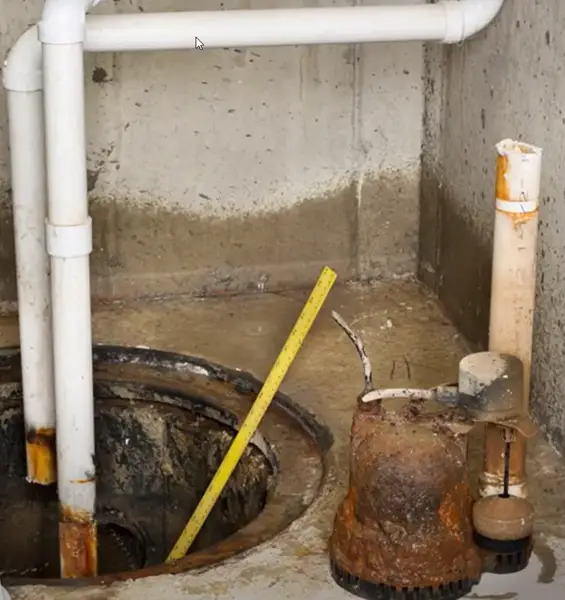
Rust or corrosion on the pump’s housing or components is a serious warning sign that shouldn’t be ignored.
The exception is when the pump body is made of cast iron. Cast iron sump pump bodies will last the lifetime of the pump even when rusted.
Corrosion can occur from prolonged exposure to moisture or from minerals and bacteria present in groundwater. Once rust sets in, it weakens the metal parts, reducing the pump’s performance and reliability.
If you notice discoloration or flaking metal, it’s usually more cost-effective to replace the pump entirely rather than repair it.
Musty or Moldy Odors in the Basement
When your sump pump isn’t doing its job properly, moisture lingers. The result is often a musty or earthy odor in your basement. This is a red flag that your pump isn’t removing water efficiently, allowing dampness to promote mold growth.
Mold and mildew not only damage your belongings but can also affect indoor air quality and your family’s health. If these odors persist, inspect both the sump pit and pump for blockages or mechanical failure.
The Pump Doesn’t Turn on Automatically
Sump pumps are built to activate when the float switch detects water. If you have to manually turn the pump on, there’s a malfunction somewhere in that process.
A float switch that’s stuck, tangled, or broken is a common cause. In other cases, a tripped circuit breaker or electrical problem could be to blame.
Ensuring that the pump is properly connected to a power source and testing it regularly can prevent surprise failures during storms or heavy rain.
Water Pooling Around the Basement Floor
Few signs are as alarming as seeing water pooling where it shouldn’t be. If your sump pump fails to clear out water quickly, the basin may be overwhelmed, or the discharge line may be clogged or frozen.
Standing water not only threatens your belongings but can also seep into foundation cracks and cause long-term structural issues.
Once water starts accumulating, your sump pump has likely lost efficiency or stopped working altogether.
Old Age and Lack of Maintenance
Like any appliance, sump pumps don’t last forever. The average lifespan is between seven and ten years, depending on usage and maintenance.
An aging pump may still run but with declining efficiency and increased risk of failure. Regular maintenance, including cleaning the pit, testing the float switch, and inspecting the discharge line, extends its life.
If your pump is coming up on the 10-year mark, it’s a good idea to start planning for a replacement before you’re faced with an emergency.

A Failing Pump When You’re Leaving Your Home
One of the worst times for a sump pump to fail is when you’re in the process of leaving your home. During a move, it’s easy to overlook the importance of this small but vital appliance.
Yet, detaching from your old home also means ensuring it’s protected from water damage before you hand over the keys. A malfunctioning sump pump can cause flooding that delays the sale, leads to insurance claims, or damages your property’s reputation.
Checking your sump pump before you go isn’t just about home maintenance—it’s about leaving your home in the best possible condition for the next occupant.
Discharge Line Problems
Even if the pump itself works perfectly, issues with the discharge line can render it useless.
If this line is blocked, frozen, or improperly installed, water can’t flow away from your home. Instead, it may back up into the sump pit, forcing the pump to work overtime.
During freezing weather, the discharge line is especially prone to blockage. Insulating the line and checking for obstructions ensures that water can flow freely, protecting your basement year-round.
Testing Your Sump Pump Regularly
A simple but often neglected step is to test your sump pump periodically. Pouring a bucket of water into the sump pit is a quick way to see if it activates automatically and drains the water efficiently.
This test helps you catch early signs of trouble—like delayed response or sluggish pumping—before they escalate. Performing this check every few months, and especially before the rainy season, provides peace of mind and keeps your system in good shape.

Recognizing Early Warning Signs
Knowing how to spot the early signs that your sump pump is failing can make the difference between a dry basement and an expensive disaster.
From strange noises to continuous operation, these warning signals shouldn’t be ignored.
Regular maintenance and timely repairs can extend your pump’s lifespan and help you avoid water damage.
Whether you’re preparing for the rainy season or planning to move, take time to inspect your sump pump and ensure it’s working properly.
Acting early when your sump pump is failing not only protects your home but also provides peace of mind knowing your foundation—and everything inside—is safe from unwanted water.
Best Sump Pumps for Every Budget: Which One is Right for You?

Author at Best Sump Pumps
The first time I helped to install a drain tile and basement sump pump system was 1978.
Since then I have worked for a city water utility where I worked with and maintained pumps.
My rental properties and personal homes all needed sump pumps.
As a modular home dealer/builder, those new homes needed sump pumps.
I put that experience to good use by providing reliable, useful, and practical advice on buying, using, and maintaining sump pumps.